Research-first
Academic needs shape the tools, rather than the other way around.


For researchers.
By researchers.
We created WriteWise because strong research deserves clear, credible scientific writing.
Founded on research in natural language processing and academic discourse, WriteWise supports researchers, students, and universities through scientific writing tools, training, and institutional programs.
Scientific ideas are too important to be lost in the writing process.
Good research must be rigorous. Communicating it should be more accessible.
WriteWise grew from a practical challenge experienced by scientists: communicating complex findings in a coherent manuscript takes time, specialized academic writing knowledge, and repeated revisions.
Our mission is to combine advances in artificial intelligence with knowledge of scientific writing to help researchers express their ideas clearly, prepare stronger manuscripts, and maintain responsibility for their research.
Academic needs shape the tools, rather than the other way around.
Authors retain responsibility for evidence, accuracy, originality, and publication decisions.
We work with institutions on onboarding, training, and measurable writing-program outcomes.
Follow the milestones that brought our work from computational linguistics to a broader academic AI ecosystem.
Early research explored machine learning, natural language processing, and the linguistic patterns of academic discourse to help authors structure stronger manuscripts.
Our academic writing software enters university programs, helping scholars draft, revise, and communicate their scientific findings.
Research teams and doctoral programs use the software alongside tailored onboarding, training, and evaluation. Their experiences contribute to documented case studies.
University training expands to AI-assisted academic writing, prompt engineering, and responsible use of language models in research.
Joint outreach, events, and university demonstrations help connect more institutions across Latin America with academic writing tools and training.
In 2026, we expanded our research-integrity work with the official launch of RefCheck, a verification tool designed to help researchers assess citation fidelity, reference accuracy, and evidence alignment in AI-assisted academic writing.
And our work continues
A scientist, academic writing educator, and the creator of WriteWise.
More than 15 years helping researchers communicate science—and more than eight years advancing AI-assisted academic writing.
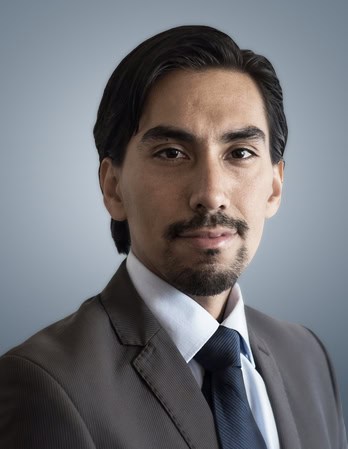
Dr. Eduardo Fuentes is the CEO, Research Director, and creator of WriteWise. His career brings together scientific research, journal publishing, peer review, computational linguistics, and academic education. He has trained more than 10,000 researchers across Latin America over the past eight years, from doctoral students to senior professors, in effective strategies for writing and publishing scientific manuscripts.
He has worked with large language models since 2017 and has led the development of AI tools intended to help researchers communicate findings with clarity, precision, and academic integrity.
Dr. Fuentes holds a Ph.D. in Biotechnology and completed postdoctoral research at the Universities of St Andrews, Aberdeen, and Gothenburg. His professional development includes 22 international certifications spanning generative AI, AI ethics, prompt engineering, AI agents, and AI-assisted scholarly writing, including programs from Harvard, Stanford, UC Berkeley, the University of Cambridge, Johns Hopkins, and UC Davis.
His work also informs the course “How to Use AI Correctly and Ethically in Academic Writing,” designed to support clearer, more accurate, and responsible scientific communication.
More than 15 years of experience in writing, editing, teaching, academic publishing, and peer review; reviewer for over 10 international journals, with more than 30 manuscripts evaluated.
55 national and international conference presentations and participation in 16 research projects, including six as principal investigator.
Eight years applying large language models to academic writing, with international training in responsible AI, prompt engineering, and research communication.
WriteWise's development combines linguistic analysis, machine learning, and domain expertise in scientific publishing.
The early research included discourse segmentation, text mining, corpus analysis, and the study of linguistic patterns found in scientific manuscripts.
Today's tools cover drafting, references, language revision, peer-review preparation, journal selection, and transparent declarations of AI use.
Guidance and academic writing education complement the software so researchers can improve their own writing skills.
Our work on RefCheck addresses a different problem: checking whether claims and references faithfully reflect their cited scientific evidence.
Selected historical outcomes from university programs involving WriteWise and tailored training or implementation support.
Reported from 52 researchers over eight months during the university's 2021 research program.
Read case study (English)Reported from 17 doctoral students over one year in the 2020–2021 implementation program.
See university results (English)Three doctoral researchers published first-author papers in Q1 journals during a program lasting under one year.
Explore researcher experiencesWe collaborate with Publiciencia, an authorized sales partner with an established presence across Latin America. Through institutional outreach, demonstrations, and coordinated training, the partnership helps universities and research organizations explore academic writing tools suited to their needs.
Our shared focus is practical access, informed adoption, and long-term relationships with the international research community.
 Authorized sales partner
Selected English-language articles from WriteWise's archive that reflect our research community, education, and innovation journey.
Explore participation in EdTech, scientific research, and innovation initiatives across global research and technology communities.
Read the storyHow our academic writing education explores generative AI, advanced prompting, and responsible use in university research.
Read the storyA Nobel laureate reflects on scientific writing, persistence in research, grant proposals, and responding to criticism.
Read the interviewOur approach places responsible authorship and transparency at the center of academic AI.
Authors must validate all claims, data, references, and generated language and observe journal and institutional policies.
Explore our tools as an individual researcher or discuss a tailored university implementation program.